
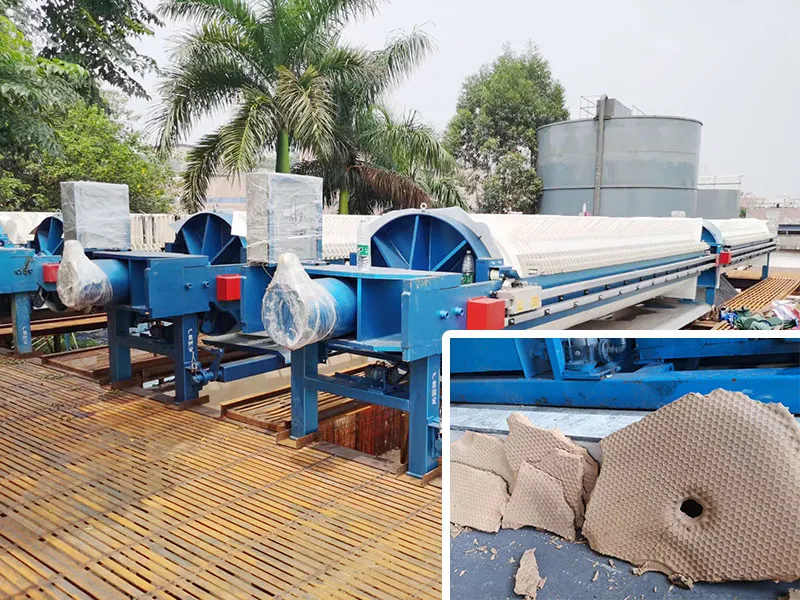
Learn what a filter press is, how it works, its main components, types, applications, advantages, and how to choose the right filter press for industrial dewatering and solid-liquid separation.
Industrial processes often generate large volumes of slurry that contain both liquids and suspended solids. Efficiently separating these materials is essential for reducing waste disposal costs, recovering valuable solids, and reusing process water.
One of the most effective technologies for solid-liquid separation is the filter press.
In this guide, we’ll explain what a filter press is, how it works, its major components, common types, applications, advantages, and how to choose the right filter press for your operation.
What Is a Filter Press?
A filter press is a mechanical dewatering system used to separate solids from liquids through pressure filtration.
The equipment pumps slurry into a series of filter chambers formed by filter plates and filter cloths. As pressure builds inside the chambers, liquid passes through the filter cloth while solids are retained and gradually form a filter cake.
The result is:
- Clear filtrate (liquid)
- High-solids-content filter cake
Because of its excellent dewatering efficiency, a filter press is widely used in industries such as mining, wastewater treatment, chemicals, food processing, metallurgy, lithium battery production, and pharmaceuticals.
How Does a Filter Press Work?
The filter press working principle is based on pressure-driven filtration.
Step 1: Closing the Plate Pack
The hydraulic system compresses all filter plates together, creating sealed filtration chambers.
Step 2: Feeding the Slurry
A feed pump transfers slurry into the filter press.
The slurry enters each chamber evenly through the feed ports.
Step 3: Filtration Process
As pressure increases:
- Liquid passes through the filter cloth
- Solids are trapped on the cloth surface
- Filter cake begins to build up
The cake itself becomes a secondary filtration layer, improving filtration efficiency.
Step 4: Cake Formation
The chambers gradually fill with solids.
Pressure continues to rise until the chambers are completely full.
Step 5: Optional Cake Squeezing
For diaphragm filter presses, compressed air or water inflates the membrane plate to squeeze the cake further.
This significantly reduces cake moisture.
Step 6: Cake Discharge
The press opens automatically or manually.
Filter cakes fall from the chambers and are collected for disposal or recovery.
Main Components of a Filter Press
Filter Plates
Filter plates create the chambers where filtration occurs.
Common materials include:
- Polypropylene (PP)
- Reinforced polypropylene
- Stainless steel
Filter Cloth
The filter cloth is the actual filtration medium.
Its selection directly affects:
- Filtration speed
- Filtrate clarity
- Cake release performance
Hydraulic System
The hydraulic cylinder provides the clamping force necessary to seal the plate pack during filtration.
Feed Pump
The feed pump delivers slurry into the press under controlled pressure.
Frame Structure
The frame supports all components and withstands operating pressure during the filtration cycle.
Types of Filter Presses
Plate and Frame Filter Press
The traditional design consisting of alternating plates and frames.
Suitable for:
- Laboratory filtration
- Fine chemical filtration
- Small-scale applications
Chamber Filter Press
The most commonly used industrial filter press.
Advantages:
- High reliability
- Simple structure
- Low maintenance
Applications:
- Mining
- Wastewater treatment
- Industrial sludge dewatering
Diaphragm Filter Press
Uses membrane plates to squeeze the filter cake after filtration.
Benefits:
- Lower cake moisture
- Shorter drying time
- Higher solids recovery
Widely used in:
- Lithium battery materials
- Chemical processing
- Mineral concentrates
Fully Automatic Filter Press
Features automated systems for:
- Plate shifting
- Cloth washing
- Cake discharge
Ideal for large-scale continuous production.
Typical Filter Press Working Cycle
A complete filtration cycle generally includes:
- Plate Closing
- Slurry Feeding
- Pressure Filtration
- Cake Formation
- Membrane Squeezing (Optional)
- Air Blowing (Optional)
- Plate Opening
- Cake Discharge
- Cloth Cleaning
Cycle times can range from 30 minutes to several hours depending on material characteristics.
Advantages of Using a Filter Press
High Cake Dryness
Filter presses can achieve significantly lower cake moisture than many alternative technologies.
Excellent Filtrate Quality
Produces clear filtrate suitable for recycling or discharge.
Low Operating Cost
Reduced disposal costs and improved water recovery help lower overall operating expenses.
High Solids Recovery
Valuable solids can be recovered and reused.
Flexible Design
Available in various sizes and configurations for different industries.
Environmental Benefits
Supports wastewater reduction and water reuse initiatives.
Common Industrial Applications
Mining and Mineral Processing
Used for:
- Copper concentrates
- Gold tailings
- Iron ore
- Coal washing
Lithium Battery Industry
Filter presses play a critical role in:
- Lithium iron phosphate (LFP)
- Cathode materials
- Graphite processing
Municipal Wastewater Treatment
Used for sludge dewatering before transportation and disposal.
Chemical Industry
Suitable for:
- Pigments
- Dyes
- Catalysts
- Fine chemicals
Food and Beverage
Applications include:
- Sugar processing
- Edible oils
- Starch production
- Beverage clarification
Metal Finishing
Used to recover metal hydroxide sludge and process wastewater.
Filter Press vs Belt Filter Press
| Feature | Filter Press | Belt Filter Press |
|---|---|---|
| Cake Moisture | Lower | Higher |
| Filtrate Clarity | Excellent | Moderate |
| Footprint | Compact | Larger |
| Automation | High | High |
| Maintenance | Moderate | Higher |
| Solids Recovery | Excellent | Good |
For applications requiring maximum dryness and solids recovery, filter presses are generally preferred.
How to Choose the Right Filter Press
Selecting the correct filter press depends on several factors:
Slurry Characteristics
Evaluate:
- Particle size
- Solid concentration
- Viscosity
- Chemical composition
Production Capacity
Determine:
- Daily throughput
- Batch size
- Filtration area requirements
Desired Cake Moisture
Lower moisture requirements often justify diaphragm filter presses.
Automation Requirements
Automatic filter presses reduce labor costs and improve productivity.
Future Expansion
Choosing a scalable system helps accommodate future capacity increases.
Common Problems and Maintenance Tips
Filter Cloth Blinding
Cause:
- Fine particles blocking cloth pores
Solution:
- Regular cleaning
- Proper cloth selection
Slurry Leakage
Cause:
- Damaged cloth
- Plate misalignment
Solution:
- Inspect seals and plate pack alignment
Uneven Cake Formation
Cause:
- Poor feed distribution
Solution:
- Check feed pressure and slurry consistency
Plate Damage
Cause:
- Excessive pressure
- Improper handling
Solution:
- Follow manufacturer pressure limits
Routine maintenance significantly extends equipment life and ensures stable filtration performance.
Frequently Asked Questions
What is the purpose of a filter press?
A filter press separates solids from liquids using pressure filtration to produce dry filter cake and clear filtrate.
What industries use filter presses?
Mining, wastewater treatment, chemicals, food processing, pharmaceuticals, metallurgy, and lithium battery manufacturing.
How efficient is a filter press?
Filter presses are among the most efficient dewatering technologies available, often achieving cake solids content above 70%.
What is the difference between a chamber filter press and a diaphragm filter press?
A chamber filter press relies solely on filtration pressure, while a diaphragm filter press adds membrane squeezing to further reduce cake moisture.
How long does a filter press last?
With proper maintenance, industrial filter presses can operate reliably for more than 10–20 years.
Conclusion
A filter press is one of the most effective and widely used technologies for solid-liquid separation. By combining pressure filtration, efficient cake formation, and high solids recovery, filter presses help industries reduce waste, recover valuable materials, and improve sustainability.
Whether you operate a mining plant, wastewater treatment facility, chemical factory, or lithium battery production line, selecting the right filter press can significantly improve operational efficiency and lower long-term costs.
If you are evaluating filtration equipment, consulting with an experienced filter press manufacturer can help determine the most suitable configuration based on your specific process requirements.